
BY C HAMMOND

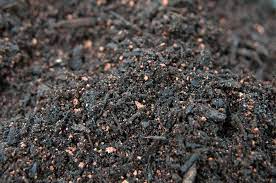
Peat is the black gold of our wetlands. It is the compressed accumulation of pickled plant material built up over thousands of years in conditions of waterlogging, oxygen deficiency, high acidity and nutrient deficiency. There are 2 types of peat of commercial interest – sedge peat formed in freshwater swamps and sphagnum moss found in lowland raised mires. Because of the wet conditions it is created in, it does not decay, so raised mires actually grow up year on year resulting in a raised hump in the middle.
Peat has been harvested from ancient times – mainly as a fuel cut manually. The Norfolk broads are the flooded remains of medieval peat workings. In more modern times, mechanical extraction has rapidly denuded the world’s peat.
Peat is hugely important to our planet for lots of reasons. It covers just 3% of the Earth’s land surface but stores one-third of the carbon in our soil. Peat bogs and mires contribute to controlling flooding as well and are important for wildlife. They are a habitat for hen harriers, short eared owls, curlew and snipe as well as plants like the sundew.
Peat has a special place in our culture. Peated whisky is given a smoky flavour by compounds which are released by the peat fires used to dry malted barley. The length and intensity of exposure to the peat smoke dictates the strength of this flavour as do the characteristics of the peat itself.
Peat bogs also preserve things which fall into them, leading to significant archaeological finds and fossilised bog-wood.
Note that so called ‘sustainable’ peat is simply peat from bogs which are not listed a Sites of Special Scientific Interest or from overseas – Peat accumulates at about 1mm a year so a sustainable rate of extraction is nothing like the millions of cubic metres extracted a year.
It’s not a completely hopeless position – evidence is that, provided sufficient peats is still present, it can sustain the conditions needed to regenerate – but slowly!


The UK government recognise that the voluntary approach to reducing peat use has not worked. It will be consulting on banning the sale of peat and peat containing products in the amateur sector by the end of this parliament. If you are a gardener, you are going to have to adjust, so why not start now and do your bit to save this unique habitat.
The Royal Horticultural Society (RHS) and National Trust have taken leads on the issue and created policies with regard to the use of Peat within their organisations.
At an AGM in 1999, the National Trust voted to stop using peat to grow plants. Peat can trap and store carbon dioxide for centuries, effectively making it a fossil fuel. What’s more, peat absorbs a lot of water, making it a key part of natural flood defences. For a charity dedicated to the environment, the choice to divest from peat use was a natural one.
The National Trust have 12 key peat research projects underway and a report was issued from their Wallington site entitled ‘Land Management for Soil Carbon at Wallington’ (https://nt.global.ssl.fastly.net/documents/land-management-for-soil-carbon-at-wallington.pdf)
In the summary of the report, it states ‘The National Trust owns 1.5% of the land in England, Wales and Northern Ireland. At Wallington alone (5500 hectares), the land-based carbon store is estimated to be 1,265,000 tonnes – equivalent to the annual Co2 emissions from the populations of Newcastle and Gateshead. The preservation of this vast and fragile resource rests on good land management.’

The Royal Horticultural Society (RHS) has committed to going completely “peat-free” by 2025 and is calling on gardeners across the UK to do the same.
Here are just some of the achievements the RHS has accomplished on peat:
Harnessing the expertise of RHS scientists, horticulturists and members is important to us. It ensures that we can act with precision and passion on the issues facing gardeners, growers and the environment.
Leading Scientific Research – We are currently working as a partner on an Horizon 2020 Organic Plus project that is looking to develop alternative peat-free growing media.
Providing Peat Free Advice – The RHS provide peat free advice to members and are working on creating peat free soil mixtures.
Peat Free Gardens – the RHS took the decision many years ago to make all five of our RHS Gardens peat-free – except for a handful of specialist plants.
Peat Free Shows – Currently exhibitors and designers do not use peat in the mulching and dressing of beds. The RHS are now extending this and working with exhibitors to transition towards no peat use at shows by 2025.
Ongoing research into alternative products including bark, wood fibre, bracken, sheep’s wool waste, and green waste compost. Using peat free compost is one way you can cut your carbon footprint.
Garden Centres including Squires are also joining the efforts for peat free products. Sarah Squire, Chairman of Squire’s Garden Centres stated for this article:
“The growing demand for peat-free and reduced peat composts is encouraging. I only use peat-free compost in my garden and it works a treat. Most plants will grow just as well in a peat-free compost.
At Squire’s we stopped selling bagged moss peat years ago and we never recommend peat as a soil conditioner; suitable alternatives include bark or composted stable manure. In terms of growing media we continue to increase our range of peat free compost, and in 2022 our own brand of compost will be peat free.”